 CupPlants
Vegetable
Kale
Brassica oleracea var. acephala
A leafy cool-season crop with curly or flat varieties.
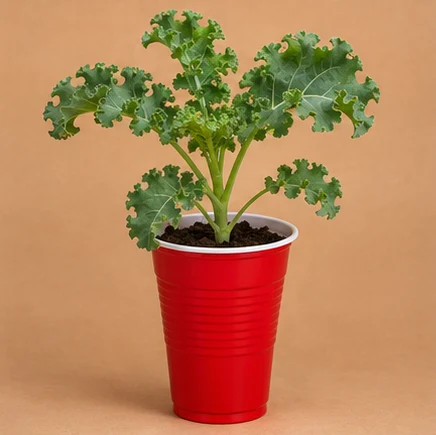
What comes in the cup
A young kale plant in a red cup without drainage holes, with growing medium.
Light
Give seedlings strong indoor light. Grow outdoors in sun or light shade.
Watering
In the red cup: The cup has no drainage holes. When the surface begins to dry, add a little water at a time. Stop when the mix is lightly moist. If water pools, gently tip out the excess while holding the root ball in place. Once transplanted to a pot with drainage or a garden bed: Water when the surface begins to dry. Keep young roots evenly moist.
Planting and transplanting
Harden off, then transplant into a draining container or bed in sun or light shade. Keep the root ball intact. Gradually acclimate the plant to outdoor conditions before moving it outside full time.
What to watch for
Pick outer leaves as they size up and leave the center growing tip. Check leaf undersides for caterpillars.
Common varieties
- Lacinato
Also called dinosaur kale, with dark, crinkled strap leaves. - Dwarf Blue Curled
A compact curly kale for smaller spaces. - Red Russian
Flat, lobed leaves with purple stems.